
Moroccan Fantasia
Moroccan Fantasia, known as Tbourida, is one of the oldest equestrian arts preserved across the Maghreb. This deep-rooted tradition blends horsemanship, choreography, and the mastery of firing rifles in perfect unison. Passed down through generations, it remains a proud symbol of Moroccan identity, tribal heritage, and the ancient values of courage and discipline.
Today, Fantasia continues to thrive through major festivals held across the country, where tribes compete to showcase the elegance of their riders, the strength of their horses, and the precision of their gunpowder charge.
What Is Moroccan Fantasia (Tbourida)?
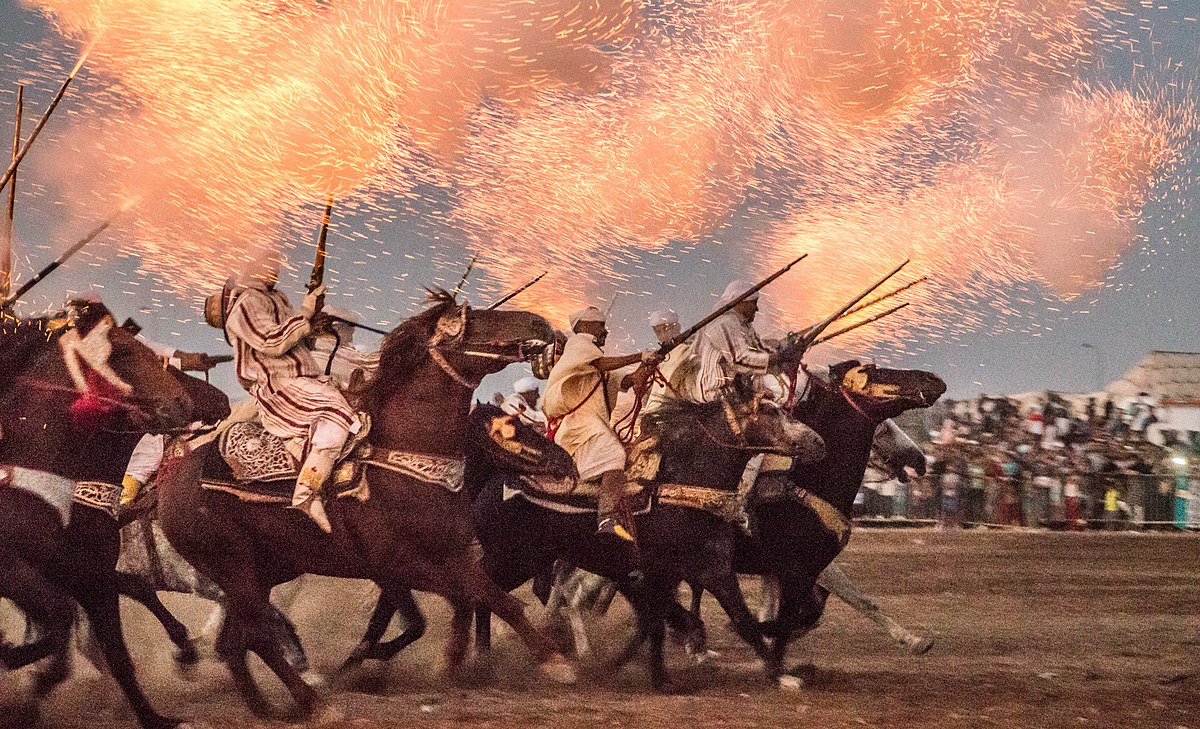
Fantasia is a traditional equestrian performance that simulates historic cavalry charges. Each group of riders, called a sorba, performs a synchronized gallop ending with the simultaneous firing of rifles. This single crack of gunpowder, perfectly timed, is considered the mark of excellence.
The art combines several symbolic elements:
- Horsemanship – perfect control at full gallop
- Traditional attire – embroidered costumes, turbans, leather belts, and rifles
- Decorated horses – richly adorned saddles, harnesses, and textiles
- Gunpowder firing – a coordinated shot known as the talet
What began as a battle ritual now lives on as a cultural celebration, performed during festivals, religious holidays, and national events.
Mansouriya Festival: A Pillar of Moroccan Equestrian Heritage
The Mansouriya Festival of Tbourida, located south of Rabat, is one of Morocco’s most historic equestrian gatherings. With roots going back more than 80 years, the festival was originally known as the season of the righteous Wali Sidi Mohamed Al-Sharqi.
Today, it brings together sorbas from across Morocco, 19 teams in the current edition, each representing a region with a strong equestrian legacy.
What makes this festival special?
- Riders wear brightly colored traditional costumes
- Teams present carefully coordinated formations
- Horses are selected for their strength, lineage, and elegance
- Judges evaluate precision, timing, and group synchronization
The highlight is the gunpowder charge, when an entire sorba gallops forward before firing their rifles simultaneously. The sharper and more unified the sound, the higher the team scores.
Many riders come from diverse professions, including engineers, teachers, government employees, and even Moroccans living abroad, yet all share the same passion for preserving Moroccan Fantasia.
Where the Moroccan Fantasia Festivals Are Celebrated
Moroccan Fantasia is practiced throughout the country, but certain regions are especially known for their historic connection to horsemanship. One of the most notable is the Moulay Yacoub region, which hosted a major Tbourida festival from August 17 to August 21.
Organized by the Nasr Association for Borrowing, Culture and Development, the event aims to preserve and promote Morocco’s equestrian heritage. The festival celebrates:
- The aesthetics of traditional horse decoration
- The elegance of the riders
- The symbolic roots of Tbourida as a ritual of unity and strength
- The connection between tribes through shared heritage
The Moulay Yacoub region, with its long-standing tribal history, has always defended Morocco’s cultural identity and resistance values.
Fantasia in Moulay Yacoub: A Celebration of Heritage
The event in Moulay Yacoub brought together some of the most renowned equestrian teams from across Morocco. These sorbas have represented their regions nationally and internationally.
The festival coincides with important Moroccan national celebrations, including:
- The Anniversary of the King and the People’s Revolution
- Youth Day
- Throughout the event, spectators enjoyed:
- Spectacular Tbourida charges
- Traditional chants, songs, and tribal calls
- Exhibitions of local craftsmanship
- Displays of decorated saddles and historic rifles
According to local officials, the festival also supports rural development by promoting agriculture, breeding, and traditional arts.
Why Moroccan Fantasia Matters
Moroccan Fantasia is more than a performance; it is a living symbol of:
- Moroccan identity
- Tribal unity
- Historical resilience
- Pride in craftsmanship and horsemanship
Each festival helps ensure that younger generations continue to inherit the knowledge of horse care, riding techniques, and the discipline required to perform a perfect powder shot.

