
Meknes City: History, Culture, and Top Attractions in Morocco
Meknes city is often overshadowed by its more famous neighbors, but those who take the time to explore it quickly discover a city filled with charm, heritage, and peaceful beauty. Once the proud capital of the Alaouite Empire, Meknes is still affectionately called the “Versailles of Morocco” or “Little Paris”, thanks to its grand architecture and refined atmosphere. Despite its quiet character today, the traces of its glorious past remain visible at every corner.
Where Is Meknes city Located?
Meknes lies in northern Morocco, about 60 km from Fez and 150 km from Rabat. Many travelers overlook it or stay only briefly, unaware of how much the city has to offer. Meknes rewards slow exploration: its medina, palaces, gates, and historic neighborhoods reveal centuries of Moroccan history and culture.
Strolling through Meknes is like walking through a living museum that tells the story of the nation’s rulers, traditions, and architectural evolution.
Short History of Meknes city
Meknes is one of the four Imperial Cities of Morocco, and its history stretches back more than a thousand years. The city takes its name from the Meknassa, a Berber tribe that settled here in the 10th century after descending from the Middle Atlas Mountains to the fertile Saïs plateau.
However, a fortified settlement existed even earlier, in the 8th century, thanks to the region’s rich soil and abundant water sources.
The city grew significantly under the Almohad and Merenid dynasties between the 12th and 15th centuries, who strengthened Meknes with impressive defensive walls — some of the oldest in Morocco today.
Meknes city Under Mulay Ismail
The most dramatic chapter in Meknes’ history began in 1672, when Sultan Mulay Ismail chose it as the capital of Morocco. Ambitious and feared, Ismail transformed Meknes into a grand imperial city designed to rival the courts of Versailles and Marrakech.
His projects included massive gates, palaces, stables, gardens, fortifications, and barracks. Legend says the ruler punished workers harshly, and some stories even claim the city’s walls were reinforced with materials taken from Volubilis and Marrakech.
Although many of his plans were left unfinished, Meknes still bears the majestic signature of his reign.
Unfortunately, the city suffered major damage during the catastrophic 1755 Lisbon earthquake, and its political importance gradually declined.
In the early 20th century, Meknes became a strategic base for the French army during the Protectorate, leading to conflicts and further hardships. After Morocco gained independence in 1956, development resumed and the city began to thrive once again.
The Medina of Meknes city
The Meknes Medina was designated a UNESCO World Heritage Site in 1996. Its unique blend of Arabic, Andalusian, and French influences makes it one of the most fascinating old towns in Morocco.
The maze of narrow streets, souks, hidden courtyards, and small squares is endlessly captivating. Every turn reveals another layer of the city’s personality.
Top Attractions in Meknes city
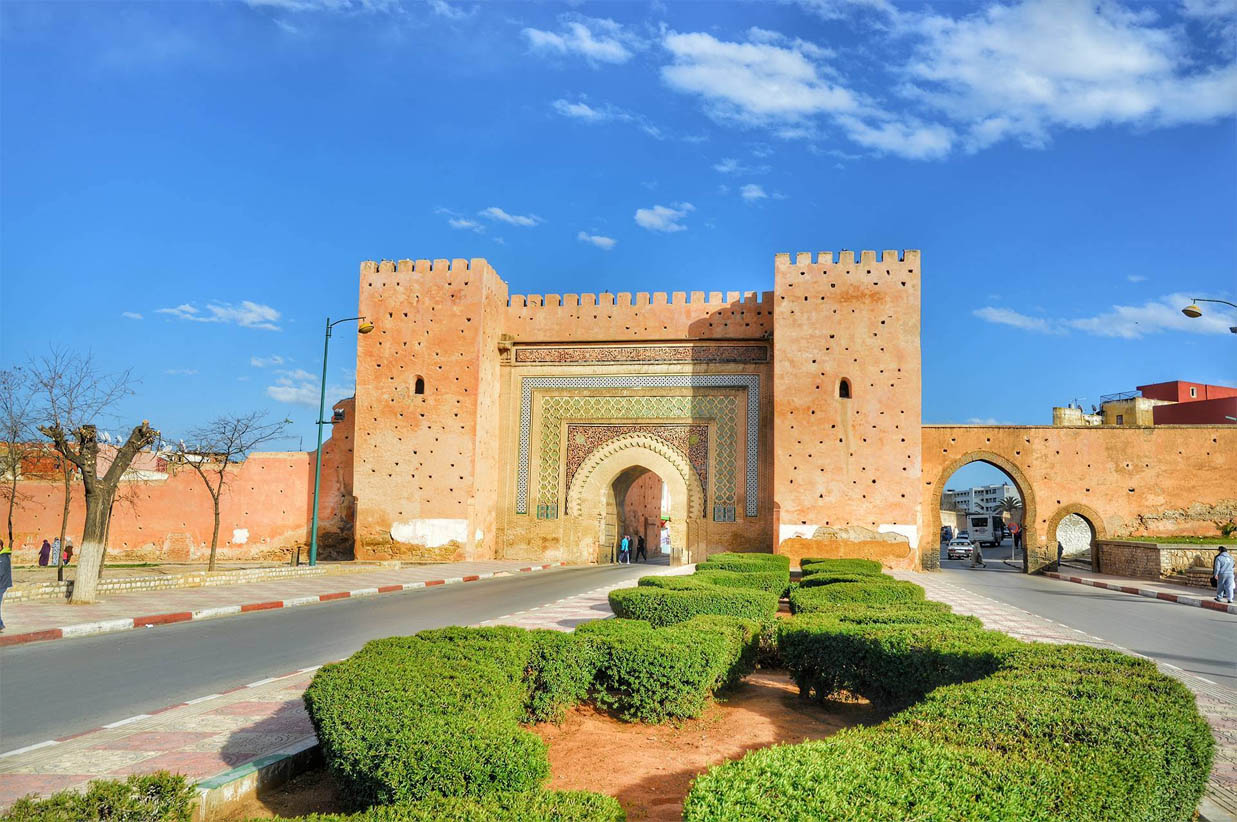
Bab Mansour
The city’s most iconic landmark, Bab Mansour, stands at the entrance of the old city. Completed in 1732, it is one of the largest and most impressive gates in North Africa.
Its intricate zellij mosaics, marble columns from Volubilis, and monumental archway make it a masterpiece of Alaouite architecture.
Lalla Aouda Square
Beyond Bab Mansour lies Place Lalla Aouda, once the vast parade ground of Sultan Ismail’s Black Guard, which counted around 16,000 soldiers. This square was part of the grand palace complex known as Dar el-Kebir.
Mausoleum of Mulay Ismail
Behind the pavilion of Kubbat el-Khiyatin lies the peaceful Mausoleum of Mulay Ismail. Despite his fearsome reputation, the sultan’s resting place draws large numbers of Moroccan pilgrims seeking blessings or barakah.
The mausoleum is open to non-Muslims in certain areas, making it one of the few accessible royal tombs in Morocco.
Great Mosque of Meknes
In the heart of the medina stands the Great Mosque, originally founded in the 12th century. The mosque suffered a tragic collapse in 2010 when its minaret fell due to heavy rains. Restoration efforts continue to preserve its religious and architectural importance.
Royal Granaries and Stables (Heri es-Souani)
Sultan Ismail’s appetite for grand projects is best seen at Heri es-Souani, a complex of monumental granaries and stables built to house 12,000 royal horses.
The site includes giant vaulted chambers and a clever ventilation system that kept grain fresh, an engineering wonder of its time.
Medersa Bou Inania
A jewel of Marinid architecture, the Medersa Bou Inania features carved woodwork, marble, stucco, and colorful majolica tiles. Its harmony of geometric patterns and delicate craftsmanship makes it one of the city’s most beautiful historic buildings.
Another notable religious school is the Madrasa of Mulay Idris, known for its rare cylindrical minaret.
Dar Jamaï Museum
The Dar Jamaï Museum houses an excellent collection of Berber rugs, traditional clothing, ceramics, jewelry, and woodwork. Its Andalusian-style garden offers a peaceful escape after exploring the medina.
Ville Nouvelle
The new city, built during the French Protectorate, features elegant villas, wide avenues, banks, boutiques, and cafés serving fragrant Moroccan-French coffee with hints of cinnamon or cardamom. This district shows Meknes’ modern, cosmopolitan side.
Vineyards and Olive Groves
The fertile hills around Meknes are among Morocco’s top regions for wine and olive oil. The vineyards, originally developed by the French, continue to produce notable reds and whites, including:
- Les Coteaux de l’Atlas
- Beni M’Tir Cabernet Sauvignon
- Comtesse de Lacourtabalise
- Beauvallon Chardonnay
- Medaillon Cabernet Sauvignon
Morocco’s wine industry is small, but Meknes is one of its standout regions.
Souks of Meknes city
Meknes is home to vibrant markets full of character. Highlights include:
- Jewelry market near Bab Berrima
- Carpet souk near Dar Jamaï
- Spice and nut market north of the palace
Each souk showcases the city’s artisan traditions, from textiles to fragrances to culinary treasures.

